
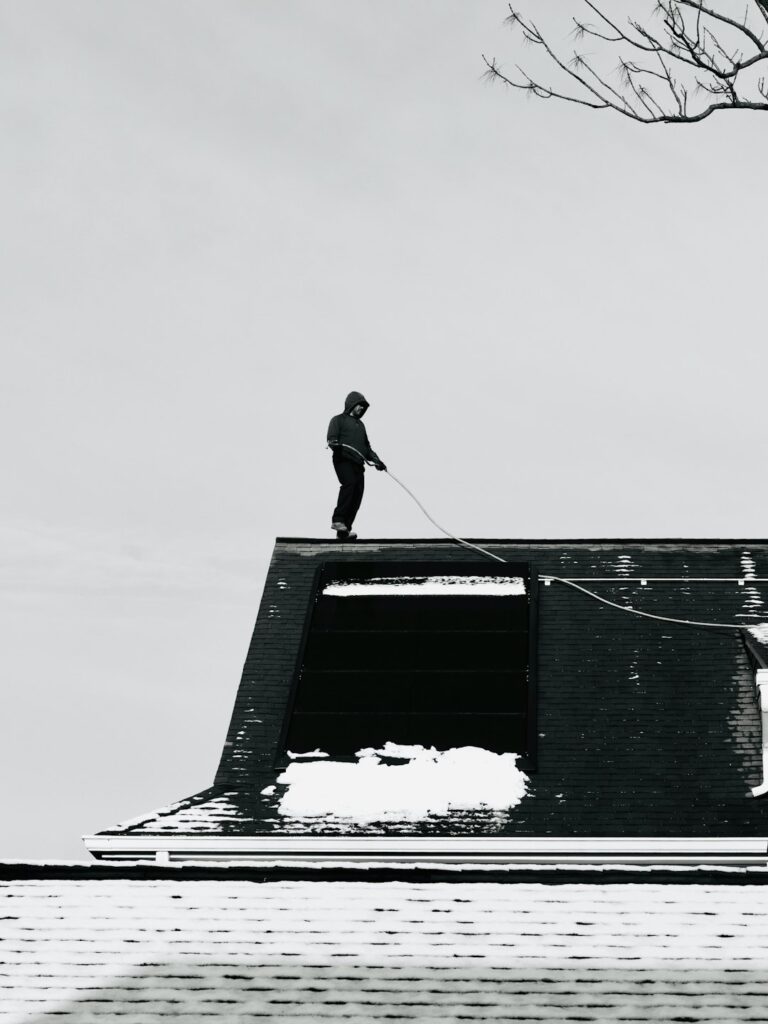
Why rooftop safety deserves extra attention
For homeowners in Malone, NY, roof access can become hazardous because of snow, ice, wind, steep slopes, and changing weather. A roof that appears dry and manageable from the ground may have hidden weak spots, slippery areas, or unstable roof-edge conditions.
Most routine roof observations can be made safely from the ground. Climbing should be limited to situations where the task is necessary, conditions are suitable, and the person has the right equipment and experience.
Is it safe to walk on a residential roof?
Not always. A roof may be unsafe to walk on even when it looks solid. Asphalt shingles become brittle with age and can lose their protective surface when stepped on. Metal roofing can be extremely slippery, while wet wood, moss, frost, and algae reduce traction on many roof surfaces.
Avoid walking on a roof when:
- Snow, frost, rain, or ice is present
- Wind is strong or expected to increase
- The roof is steep, damaged, or visibly sagging
- Shingles are loose, curled, cracked, or missing
- The roof has moss, algae, or other slippery growth
- Visibility is reduced by darkness, glare, or blowing precipitation
- The person lacks suitable fall-protection equipment
Never assume that a low roof is automatically safe. Falls from a single-story roof can still cause serious injury, particularly when the landing area contains concrete, fencing, landscaping stones, or other hard objects.
What should homeowners inspect from the ground?
A ground-level inspection can reveal many warning signs without exposing anyone to unnecessary fall risk. Use binoculars if closer visibility is needed, and look from several sides of the house.
Check for:
- Missing, cracked, or lifted shingles
- Dark patches that may indicate moisture or damaged materials
- Sagging rooflines or uneven sections
- Damaged flashing around chimneys, vents, and roof intersections
- Gutters pulling away from the fascia
- Granules collecting beneath downspouts
- Ice buildup along eaves
- Tree limbs touching or hanging over the roof
- Water stains on exterior walls, soffits, or ceilings
After heavy snow or wind, compare the roofline with its usual appearance. A new dip, separation, or irregular shadow may indicate structural stress or water intrusion.
How can a ladder be used safely?
Ladders should be placed on firm, level ground away from ice, snow piles, mud, and soft soil. Clear the area around the base so that nobody bumps the ladder while it is in use.
Before climbing:
- Inspect the ladder for bent rails, damaged feet, loose hardware, or contamination
- Fully open and lock a stepladder
- Keep both hands available while climbing
- Face the ladder instead of turning sideways
- Maintain three points of contact
- Keep the belt buckle between the side rails
- Do not stand on the top step or top cap of a stepladder
- Avoid carrying bulky tools while climbing
- Have another adult stabilize the ladder when appropriate
For a ladder used to reach a roof edge, the ladder must extend safely above the landing point and be secured against movement. Improvised supports, stacked materials, or placing a ladder on top of snow are unsafe practices.
Do not move or reposition a ladder while standing on it. Climb down first, then adjust it.
What changes during winter in Malone?

Winter conditions create several separate hazards, not just one. Snow can hide roof damage, cover skylights, and make the roof edge difficult to identify. Ice may form beneath a thin layer of snow or on shaded sections that receive little sunlight.
Homeowners should also watch for falling ice and snow near entrances, walkways, parked vehicles, and lower roofs. Ice dams along the eaves can hold water against roofing materials, but removing them from the roof can be dangerous. Chopping at ice may damage shingles, membranes, gutters, or flashing.
Snow should not be shoveled from a roof with ordinary household tools. A person standing below may also be struck by falling snow or ice. Keep children and pets away from areas where roof material may slide unexpectedly.
After a major snowfall, watch for signs of excessive load, including:
- Interior doors that suddenly stick
- New cracks in ceilings or upper walls
- Unusual popping or creaking sounds
- Sagging ceilings
- Doors or windows that no longer close normally
- Visible roofline distortion
These signs call for immediate caution. Stay out of affected areas and avoid adding weight to the roof.
How should homeowners handle gutters and roof edges?
Cleaning gutters involves a ladder and often requires reaching away from the ladder’s centerline. That combination creates a common fall risk. Do not overreach, stand on the upper rungs, or move sideways while carrying tools.
Loose gutters, rotted fascia, and damaged roof edges can also fail under pressure. A ladder should never rest directly against a gutter unless the setup is specifically designed for that purpose and the gutter is known to be structurally sound.
For many homes, gutter maintenance can be planned from the ground by observing overflow marks, blocked downspouts, and water collecting near the foundation. If access requires unstable footing or work near overhead wires, the task should not be attempted casually.
What electrical hazards are near the roof?
Overhead electrical lines may pass near roof edges, ladders, antennas, satellite equipment, or tree branches. Electricity can arc across a gap, meaning direct contact is not always necessary for a severe shock to occur.
Keep ladders, long-handled tools, metal flashing, and roofing materials well away from electrical lines. Never use a metal ladder near overhead wiring. If a power line has fallen onto the roof, a tree, or the ground, stay away and keep others back. Do not touch the line, nearby objects, or anyone who may be in contact with it.
Roof work near electrical equipment, service connections, or solar installations requires additional caution because hidden or energized components may be present.
When should a homeowner stay off the roof?
A homeowner should avoid roof access when the surface is wet, icy, snow-covered, structurally questionable, or difficult to reach safely. The same applies when the task involves steep slopes, chimney work, skylights, roof penetrations, or extensive repairs.
Skylights deserve special attention. They may be translucent, weathered, or covered with debris, but they are not designed to support a person’s weight. Never step on a skylight or assume that a surrounding curb can be used as a foothold.
Professional assistance is justified when a fall could occur, structural damage is suspected, electrical hazards are nearby, or specialized fall-protection equipment is required. Safety is also a concern when a homeowner feels rushed, fatigued, or uncertain about the roof’s condition.
What should be done after a storm?
After high winds or severe weather, inspect the property from the ground first. Look for displaced shingles, branches, exposed underlayment, damaged vents, leaning gutters, and debris near roof drainage areas.
Do not climb onto the roof immediately after a storm if surfaces are wet or unstable. Watch for fallen electrical lines and damaged trees before approaching the structure. Inside the home, check ceilings and upper walls for new stains, bubbling paint, or dripping water.
If water is entering near a light fixture or electrical outlet, avoid touching the fixture and move away from the area. Water and electricity can create a serious shock hazard.
Rooftop safety starts with recognizing when a task can be observed from the ground and when access creates more risk than benefit. In a community with snowy winters and frequent freeze-thaw conditions, careful timing, stable footing, and respect for roof hazards are more useful than rushing to complete a minor inspection.
